


Football didn’t just teach me the game—it taught me people. Long before I knew the language of diplomacy, the pitch showed me how conflict brews, how trust is built, and how belonging feels. Everything I now study, teach, and lead began there—on the touchline, where the whistle often said more about life than any textbook ever could.
I come from two worlds: the rural spirit of Ahero in western Kenya and the immigrant hum of Everett, Massachusetts. Between them stretched a lifetime of questions about identity, belonging, and purpose. Yet, through all of it, football remained the one constant—an instrument of clarity in moments when the rest of life felt blurred or fragmented.
On the pitch, my accent didn’t matter
In Kenya, the game was joy—dust rising around bare feet, laughter echoing across maize fields, the simple thrill of chasing a ball that had already been patched too many times. When I moved to the United States, football became something deeper: a bridge through the disorientation of migration, a lifeline when everything else felt foreign, and a common tongue spoken by kids whose families came from every corner of the world. On the pitch, my accent didn’t matter. My background didn’t matter. What mattered was effort, discipline, and heart.
Eventually, I realized I wasn’t just playing the game—the game was shaping me.
Growing up Kenyan-American meant constantly navigating between cultures, expectations, and identities that did not always align. But stepping onto a field—whether in Everett or Nairobi—was like entering a country that belonged to everyone. It was there that I learned the rhythms of leadership: how to listen, how to motivate, how to hold a team together when emotions ran high, and how to accept responsibility when things fell apart.
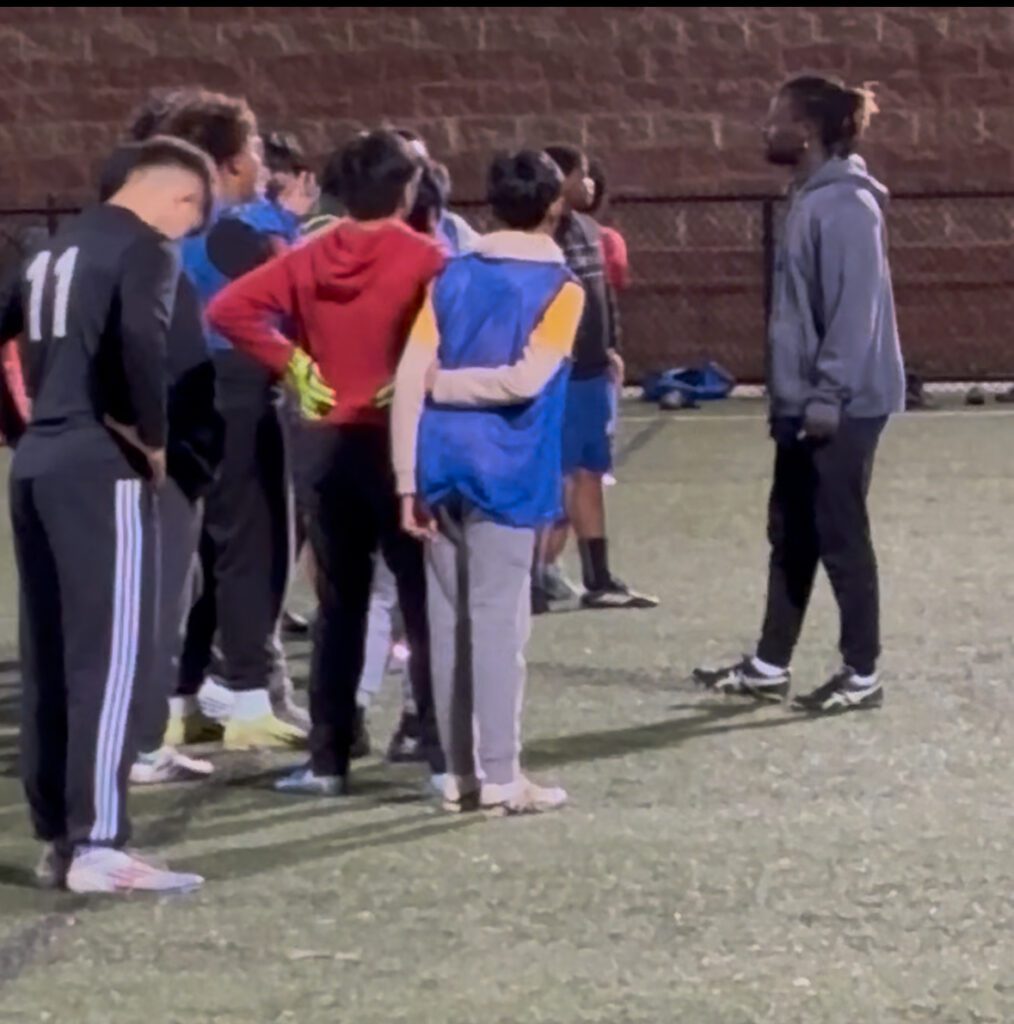
I didn’t become a coach out of ambition. I became one because the role found me—quietly, naturally, almost inevitably. As I grew older, teammates began seeking direction, younger players gravitated toward my presence, and before long I was coaching youth whose stories mirrored my own. I became someone they trusted—not because I had all the answers, but because I understood the questions.
In Love with my City
Coaching in Everett is unlike coaching anywhere else. Here, the team sheet reads like a United Nations roster: Cape Verdean strikers, Afghan wingers, Haitian defenders, Brazilian midfielders, Somali goalkeepers, Colombian playmakers, and, of course, Kenyan kids eager to take their place. The diversity wasn’t a challenge; it was the magic. It turned every training session into a global seminar on identity, belonging, and human behavior.
If you want to understand diplomacy, spend a season inside an immigrant locker room.
There, cultural misunderstandings ignite small conflicts while unexpected moments of empathy quietly stitch them back together. Watch closely and leadership reveals itself as fluid—passing between players according to need, pressure, or wisdom gained the hard way. Communication becomes more than language; it becomes gesture, rhythm, silence, and trust.
In that space, trust can evaporate in an instant, and its reconstruction demands patience, humility, and collective will.
What emerges is the deeper truth: some victories are never recorded on a scoreboard but live in small, disciplined moments—a player choosing restraint, a team holding its shape, a young man mastering the surge of frustration that once defined him.
These lessons followed me off the field. As I stepped into leadership roles—eventually becoming President of the Graduate Student Government at UMass Boston—I found myself drawing on the same instincts I had sharpened on the touchline. Governance, at its heart, is about people: their fears, hopes, insecurities, and aspirations. Football had been preparing me for that long before I ever sat in a boardroom.
Diplomacy on the Pitch
Over the years, I learned that coaching is not about tactics or formations—it is about the formation of character. Great players know how to read the game and move; great people know how to grow. My proudest memories are not trophies or seasons we were undefeated for championship runs, but moments of becoming:
A shy kid finally raising his voice to express themself.
A frustrated teen discovering patience.
A young girl realizing she could compete with any boy.
A refugee finding a family where he expected none.
A newcomer learning confidence with every touch of the ball.
These are the victories that matter. They stay with you. They change you.
As I advanced through the U.S. Soccer coaching pathway, I saw the field differently. I saw how activities teach resilience, how formation teaches interdependence, how failure teaches humility, and how a comeback teaches perseverance. Football is not merely a sport; it is a curriculum in human development.
The Journey
Somewhere along the way, I realized that coaching had become my first experience with diplomacy. On the field, I wasn’t just teaching passes—I was mediating identities. I wasn’t just correcting mistakes—I was navigating emotions. I wasn’t just leading games—I was guiding young people toward possibility.
This realization transformed my approach to academic studies in global governance and human security. The theories I read in lecture halls found echoes in the stories unfolding at practice: the dynamics of conflict, the structures of authority, the importance of participation, the necessity of empathy. Suddenly, the gap between academic knowledge and lived experience disappeared. The pitch and the classroom became two sides of the same lesson.
Today, as I grow deeper into both scholarship and coaching, I carry a simple truth with me:
Football raised me, coaching shaped me, and purpose is guiding me.
What the Future Holds
I am not exactly 100% certain where this journey will lead in the years ahead. I hold my aspirations with discipline and discretion, not because I fear them, but because I am still learning how best to honor them. What I do know is that the field will always remain my first teacher—and my first diplomat.
As a Kenyan American, wherever I go—into academia, community work, development spaces, or global conversations about the role of sport—I take the lessons of the touchline with me. They remind me that leadership is earned, that identity is layered, and that hope, when nurtured, can change the trajectory of a young person’s life.
Football has given me more than memories. It has given me vision, responsibility, and language—a language of presence, empathy, and purpose. As long as I can teach, mentor, write, or lead, I will continue to use the game as a bridge between people, cultures, and futures.
Because the truth is simple:
The game never let me go.
And neither will I.
